Autonomous Maintenance: Operator Care That Prevents Bigger Breakdowns
Autonomous maintenance helps operators detect early equipment abnormalities before they become failures. Learn how to make operator checks simple, visible, and actionable.
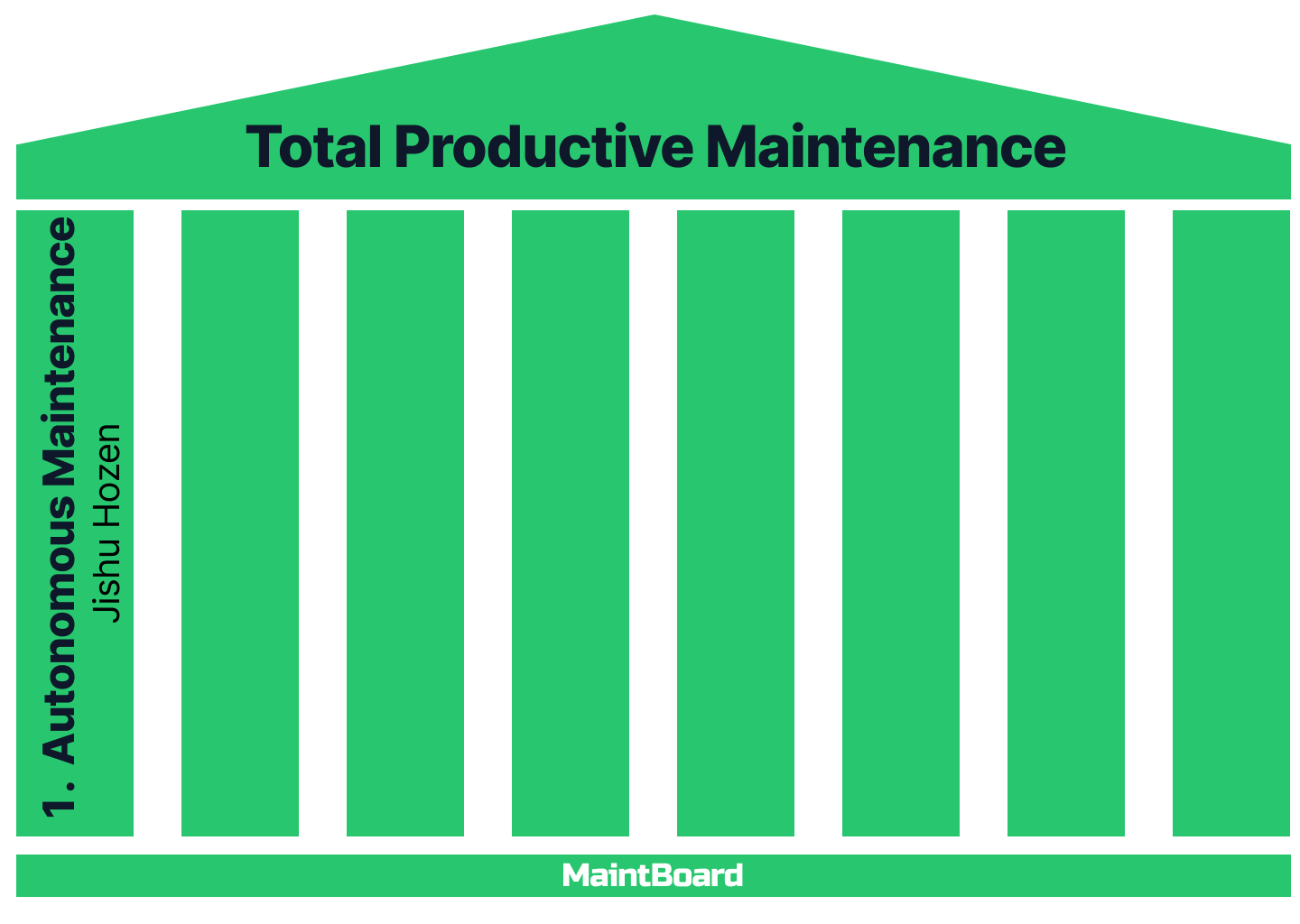
Autonomous maintenance means operators take responsibility for basic equipment care and early abnormality detection.
It does not mean operators replace technicians. It means operators help protect equipment by noticing small problems early: leakage, noise, vibration, looseness, contamination, overheating, cleaning issues, or unsafe conditions.
When done well, autonomous maintenance reduces surprise breakdowns and improves shared ownership between production and maintenance.
What autonomous maintenance includes
Typical autonomous maintenance activities include:
- Cleaning
- Visual inspection
- Basic lubrication checks
- Tightness checks
- Leak detection
- Abnormal noise detection
- Temperature or pressure observation
- Simple condition checks
- Reporting abnormalities
- Keeping equipment surroundings clean
The work should be simple and safe for operators.
What operators should not own
Autonomous maintenance should not transfer skilled maintenance work to operators without training and control.
Operators should not be expected to handle:
- Electrical repair
- Complex mechanical repair
- Safety-critical isolation
- Calibration
- Major lubrication changes
- Internal equipment adjustment
- High-risk tasks
- Work requiring permits or special tools
Those remain maintenance responsibilities.
Why autonomous maintenance fails
Many programs fail because they become paperwork.
Common problems include:
- Checklists are too long
- Operators do not understand why checks matter
- Abnormalities are reported verbally
- Maintenance does not respond to findings
- No one reviews repeated observations
- Production pressure pushes checks aside
- Supervisors cannot see missed checks
- Follow-up work is not assigned
The result is frustration. Operators stop believing the system works.
Keep operator checks simple
Good checks are short, clear, and observable.
Examples:
- Any oil leakage?
- Any abnormal noise?
- Any unusual vibration?
- Is guard in place?
- Is cleaning completed?
- Is temperature within normal range?
- Is pressure within normal range?
- Is belt tracking normal?
- Is sensor area clean?
- Any loose or damaged part visible?
Inspections and checklists software helps structure these checks without making them difficult.
Make abnormalities actionable
The value of autonomous maintenance is not the checklist. The value is what happens when something abnormal is found.
A useful flow should answer:
- What was observed?
- Which asset is affected?
- Who reported it?
- Is production affected?
- Is there safety or quality risk?
- Who reviewed it?
- Was a work request or work order created?
- Was the issue closed?
A work order management software approach helps convert operator observations into visible maintenance action.
Link autonomous maintenance with TPM
Autonomous maintenance is one pillar of Total Productive Maintenance.
It supports TPM by helping operators care for equipment condition instead of waiting for maintenance after failure.
But TPM works only when maintenance, production, and leadership share ownership. Operator checks must connect to PMs, defect removal, training, and reliability review.
Total productive maintenance software can help teams connect operator care with work orders, PMs, inspections, and performance tracking.
Review the right measures
Autonomous maintenance should be reviewed through practical measures:
- Checks completed
- Checks missed
- Abnormalities reported
- Abnormalities converted to work orders
- Open follow-up actions
- Repeat failures on covered assets
- PM compliance
- Breakdown downtime before and after implementation
These measures show whether operator care is improving reliability.
Bottom line
Autonomous maintenance works when operators can detect early signals and maintenance teams can act on them.
MaintBoard supports autonomous maintenance by connecting operator checks, maintenance requests, work orders, preventive maintenance, asset history, photos, remarks, and reports. This keeps small abnormalities from disappearing into verbal communication.
Frequently asked questions
- Is Autonomous Maintenance suitable for small businesses?
Yes. Even small workshops benefit from improved equipment care and reduced downtime.
- Does it replace maintenance technicians?
No. It supports them by freeing time for complex technical tasks.
- How long does implementation take?
Initial steps can begin within weeks, but full cultural integration may take 1–2 years.
- What industries use Autonomous Maintenance?
Manufacturing, automotive, food processing, pharmaceuticals, and packaging industries widely use it.
- Is special software required?
Not necessarily. Basic checklists and visual boards can work effectively.
- What is the biggest success factor?
Employee engagement and management support are critical.