IoT Energy Meters for Factories: What Maintenance Teams Should Evaluate
IoT energy meters help factories see consumption patterns, but the real value comes when energy data is connected to assets, downtime, abnormal conditions, and maintenance action.
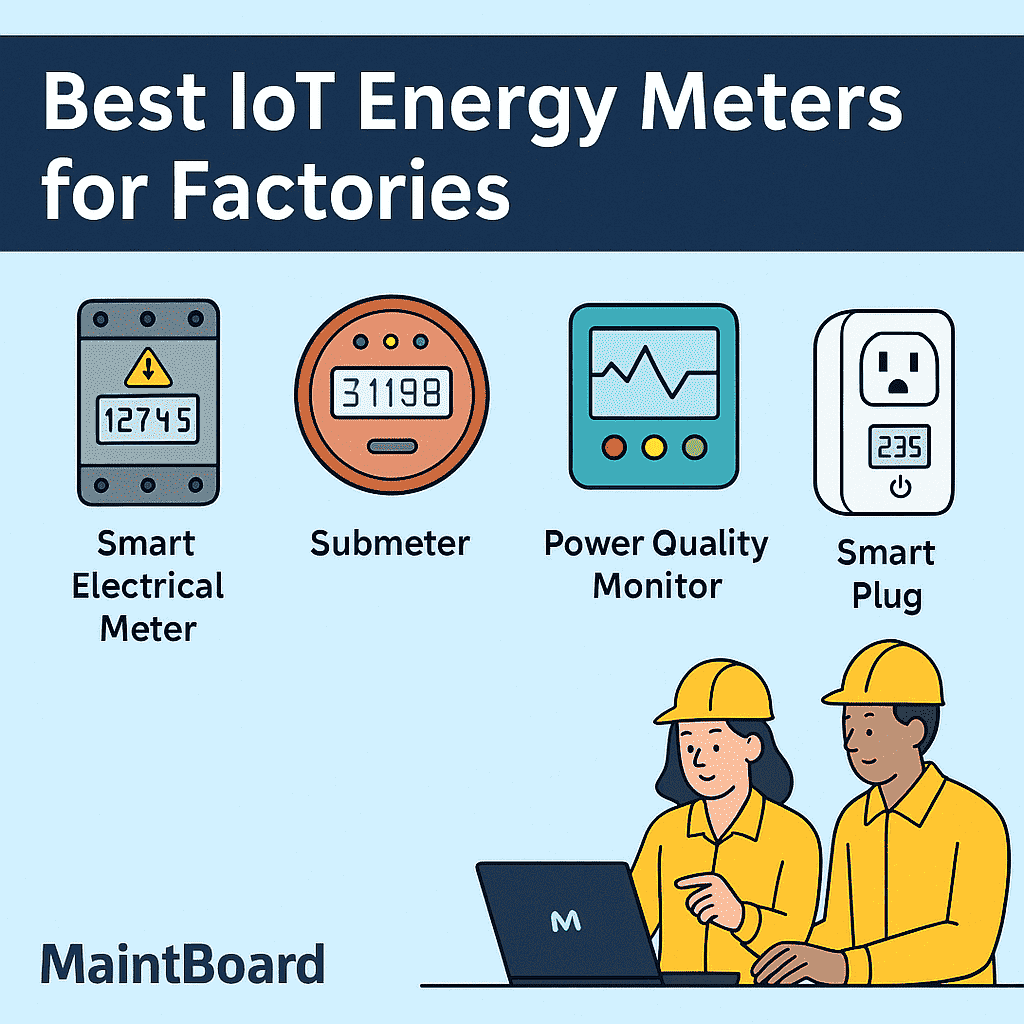
IoT energy meters can help factories understand where energy is being consumed, wasted, or behaving abnormally.
But buying meters alone does not reduce energy cost. A meter only gives data. The plant still needs a process to interpret abnormal consumption, connect it to assets, and trigger maintenance action when required.
For maintenance teams, the real question is not “Which meter is best?” It is “What decision will this energy data help us make?”
What is an IoT energy meter?
An IoT energy meter measures electrical parameters and sends readings to a software system, dashboard, gateway, or cloud platform.
Depending on the meter and installation, it may track:
- Energy consumption
- Voltage
- Current
- Power factor
- Demand
- Frequency
- Load pattern
- Phase imbalance
- Peak usage
- Equipment-level consumption
This data is useful when it is connected to production, utilities, maintenance, and asset performance.
Where factories commonly use energy meters
Factories may install meters at different levels:
- Main incoming supply
- Substation
- Department or line
- Compressor room
- HVAC or chiller plant
- Boiler or utility area
- Critical production machine
- Cold room or freezer
- Pump house
- Lighting or facility zones
The level of metering should match the decision needed. If the plant only meters the main supply, it may know total consumption but not which asset, line, or utility is causing waste.
What maintenance teams should evaluate
Before selecting or integrating IoT energy meters, maintenance teams should check practical requirements.
Important evaluation points include:
- Electrical parameter coverage
- Accuracy class
- Communication protocol
- Installation requirements
- Panel space
- Safety and isolation needs
- Data logging frequency
- Gateway or network requirement
- Integration capability
- Local display availability
- Maintenance and calibration needs
- Support and replacement availability
The meter should fit the plant environment, not just the brochure.
Energy data must connect to asset context
Energy monitoring becomes more useful when readings are linked to assets or areas.
For example:
- A compressor consuming more energy may indicate leakage or poor loading control.
- A chiller with abnormal consumption may need maintenance review.
- A motor drawing unusual current may need inspection.
- A cold room using more energy may have door, insulation, defrost, or refrigeration issues.
- A pump operating inefficiently may have blockage, wear, or process changes.
This is where energy monitoring software and maintenance workflows should work together.
Abnormal energy should create maintenance action
Dashboards alone do not fix energy loss.
When energy consumption is abnormal, the plant needs a workflow:
- Detect abnormal consumption.
- Identify the asset or area.
- Review operating condition.
- Create inspection or work order.
- Assign responsibility.
- Capture findings.
- Complete corrective action.
- Review whether consumption improved.
A work order management software process helps convert energy findings into accountable maintenance action.
Energy meters and preventive maintenance
IoT meters can support preventive maintenance when readings show changes over time.
Maintenance teams may use energy patterns to review:
- Motor load changes
- Compressor efficiency
- Pump performance
- HVAC performance
- Cold room energy behavior
- Utility losses
- Abnormal running during idle periods
These insights can trigger inspections, cleaning, adjustment, leak checks, or deeper troubleshooting.
Do not ignore calibration and verification
Energy meters are instruments. For critical usage, teams should think about verification, inspection, and calibration needs.
A calibration management software process can help track meter-related records where required by internal policy, audit needs, or energy management programs.
Reports should support action, not just display numbers
Useful energy reports should answer:
- Which area consumed the most energy?
- Which assets show abnormal trends?
- When does peak demand occur?
- Which equipment runs during non-production time?
- Which maintenance actions reduced consumption?
- Which assets need inspection?
This makes energy monitoring useful for plant heads, maintenance managers, utility teams, and finance teams.
Bottom line
IoT energy meters are valuable when they help the plant act.
MaintBoard can support the maintenance side of energy improvement by connecting energy observations, asset history, work orders, inspections, follow-up actions, and reports in a clear execution workflow.
Frequently asked questions
- What should factories check before choosing an IoT energy meter?
Factories should check load type, current rating, communication protocol, accuracy class, installation method, network compatibility, and whether the meter can provide asset-level energy data.
- Which communication protocols matter for industrial energy meters?
Common industrial protocols include Modbus RTU, Modbus TCP, MQTT, OPC UA, and BACnet. The right choice depends on whether the meter connects to PLCs, SCADA, gateways, or maintenance software.
- How do IoT energy meters help maintenance teams?
Energy meters help maintenance teams detect abnormal consumption, idle losses, compressed air leaks, motor inefficiency, and equipment drift. These signals can trigger inspections or work orders before the issue becomes costly.
- Do all factories need advanced energy meters?
No. Start with high-consumption assets such as compressors, chillers, pumps, ovens, HVAC systems, or major production lines. Expanding meter coverage is easier once the first savings are proven.
- Can energy meter data be linked to CMMS work orders?
Yes. When energy data is connected to maintenance workflows, abnormal consumption can trigger inspections, corrective work orders, or preventive actions. This turns energy monitoring into practical maintenance action.